
When people talk about pilsner today, they’re often referring to one of the most influential beer styles ever created. But there is only one original pilsner, and it comes from the Czech city of Plzeň. Pilsner Urquell, first brewed in 1842, didn’t just create a new beer – it changed brewing forever.
Before the mid-19th century, most beer was dark, cloudy and inconsistent. Brewing science was still developing, and beer quality varied wildly from batch to batch. That all changed when the citizens of Plzeň commissioned Bavarian brewer Josef Groll to create a new beer using local ingredients and emerging brewing techniques. The result was a pale, golden lager with brilliant clarity, firm bitterness and remarkable drinkability – something the world had never seen before.
The impact of this new beer spread rapidly across Europe and, eventually, the world. Many of today’s most recognisable lagers can trace their lineage back to Pilsner Urquell. Beers such as Budweiser were inspired by the pale lagers of Bohemia, including Urquell, as brewers sought to replicate its colour, clarity and clean profile for mass audiences. While these beers evolved in different directions, the DNA of the original Czech pilsner is unmistakable – crisp, approachable and built for refreshment. In that sense, Pilsner Urquell didn’t just influence a style; it helped define what much of the world thinks of as “beer.”
Another key factor in Pilsner Urquell’s rise to popularity was how it was presented. Until this point, beer was typically served in stoneware or pewter mugs, which hid the liquid entirely. The emergence of clear glassware in the 19th century allowed drinkers to see the beer for the first time, and the sight of a bright, golden lager with a dense white foam was revolutionary. Pilsner Urquell’s colour and clarity became part of its appeal, turning the beer itself into a visual statement. This shift helped cement pale lager as the dominant global beer style and forever linked pilsner with its iconic golden hue.
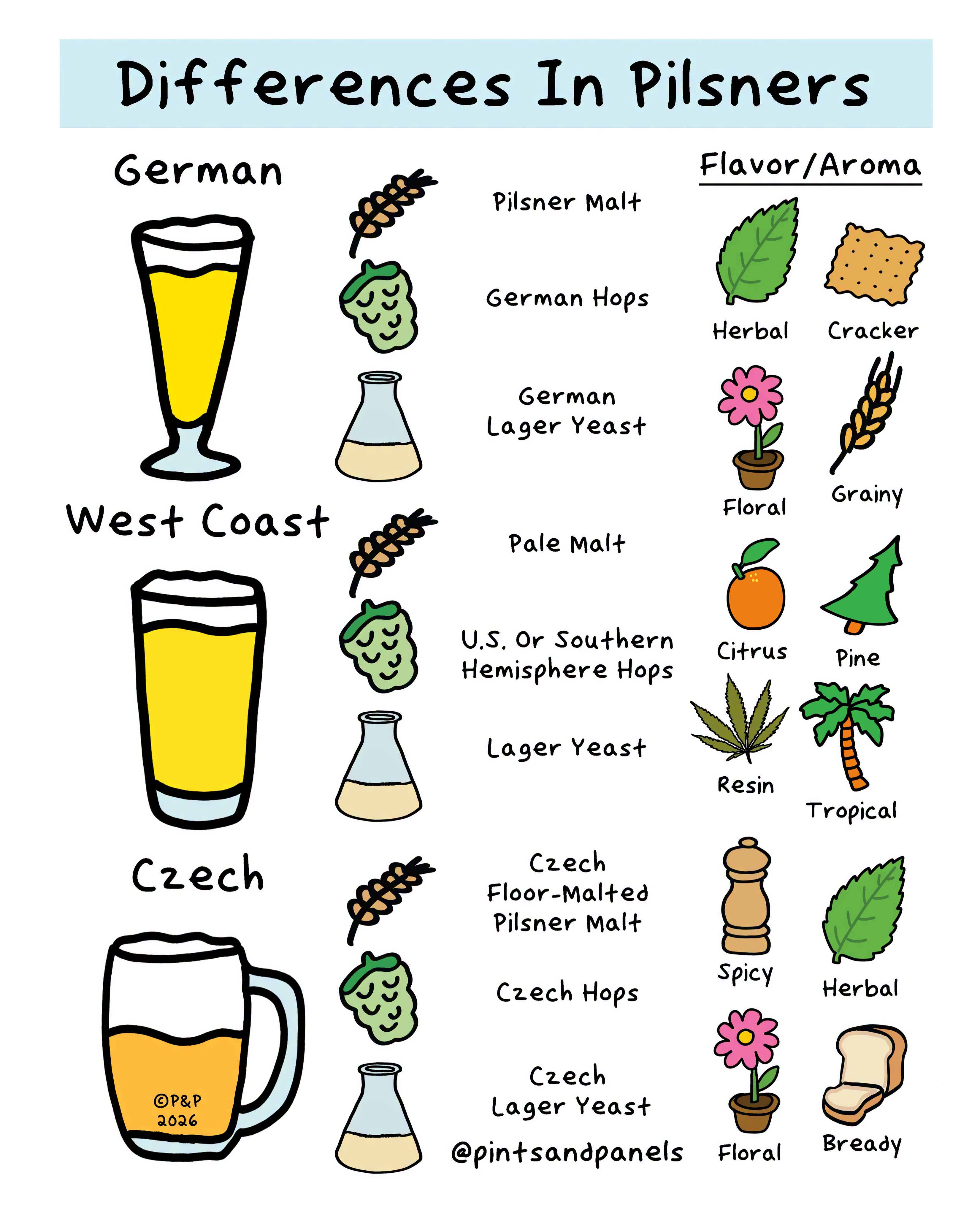
The name “Urquell” literally means original source, and it’s an accurate one. The beer introduced the world to a new combination of elements that are now standard in modern brewing: soft local water, Moravian malt dried with coke rather than wood (allowing paler malt), whole-cone Saaz hops, bottom-fermenting lager yeast, and long cold lagering. Together, they created a beer that was crisp, clean, aromatic and refreshing – and instantly copied across Europe and beyond.
I had the privilege of visiting the Pilsner Urquell brewery in 2024 and taking the full brewery tour, an experience every serious beer lover should have on their bucket list. Walking through the historic brewhouse gives you a real appreciation for the scale and precision involved, but the real magic happens underground.
Beneath the brewery lies an extraordinary network of lager tunnels, once used to mature beer in oak barrels before refrigeration existed. Deep in those tunnels, I was able to drink unfiltered and unpasteurised Pilsner Urquell, served straight from traditional wooden barrels. It’s a completely different experience to the bottled or kegged beer most of us know – softer, rounder, slightly richer, with a fresh malt sweetness and beautifully integrated hop character. It’s living beer in its purest form, and a powerful reminder of how pilsner was originally enjoyed.
Another highlight was getting to try all three traditional Czech pours, which are still taken very seriously in Czech beer culture. The Hladinka is the classic full pour with a thick, creamy foam cap. The Šnyt is a smaller pour with lots of foam, often enjoyed as a lighter, more aromatic serve. And the Mlíko – almost entirely foam – is surprisingly sweet and smooth, showcasing the malt character in a way most people would never expect. Each pour changes the drinking experience, even though it’s the same beer.
More than 180 years on, Pilsner Urquell remains a benchmark for balance, freshness and restraint. In a world full of extremes, it’s a reminder that precision, tradition and simplicity can still produce one of the greatest beers on earth. Every pale lager owes it a debt – and tasting it at the source makes that history come alive in the glass.