
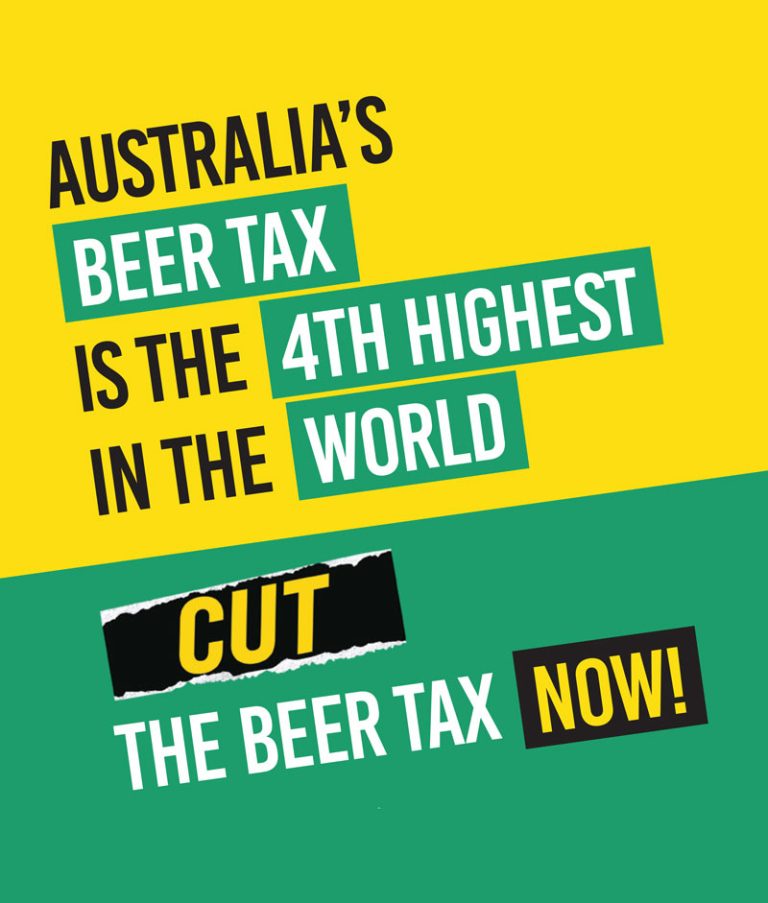
Australia’s independent brewers have renewed their call for major reform of the country’s alcohol excise system following an announcement that the Australian Taxation Office is stepping up scrutiny of businesses accessing alcohol excise concessions.
The Independent Brewers Association supports action against businesses exploiting the system.
But it argues there’s a much bigger issue that shouldn’t be lost in the crackdown:
Is Australia’s beer tax system itself in need of an overhaul?
First, what exactly is beer excise?
Excise is a tax imposed by the Federal Government on certain goods produced in Australia, including alcohol.
For breweries, the amount of excise payable varies depending on factors including the alcohol content and how the beer is packaged or supplied.
It’s therefore a tax associated with producing beer — long before you get to the GST paid when somebody eventually buys it.
For small breweries, however, there’s an important concession.
Eligible alcohol manufacturers can receive a 100 percent remission of excise duty up to $400,000 per financial year. That limit increased from $350,000 on July 1, 2026.
The scheme is designed to support smaller Australian producers, but it also creates an unusual problem.
What happens when a successful brewery grows beyond the concession?
Suddenly, excise can become a considerably larger cost to the business.
That’s one reason critics argue the system can effectively create a disincentive to grow beyond the threshold.
The ATO is cracking down
The Australian Taxation Office is now increasing scrutiny of businesses accessing the alcohol excise remission scheme.
According to The Crafty Pint, the ATO will introduce targeted pre-licensing reviews from September and increase scrutiny of newly licensed businesses during their first two years of operation.
The aim is to stop operators improperly accessing concessions they aren’t entitled to.
Few legitimate breweries would have a problem with that.
If somebody is deliberately exploiting a system designed to help genuine Australian producers, enforcement makes sense.
But the Independent Brewers Association says enforcement doesn’t address the bigger problem.
Beer tax keeps increasing
One of the industry’s long-running frustrations is that alcohol excise rates have traditionally been indexed twice each year.
That means the tax can increase automatically without a new tax being announced.
For breweries already dealing with increasing costs for ingredients, energy, freight, wages, packaging and insurance, another increase becomes one more cost that has to be absorbed or passed on.
And ultimately, somebody pays for it.
The brewery.
The pub.
Or the person buying the beer.
It’s also an administrative burden
The IBA’s concerns aren’t purely about how much tax breweries pay.
There’s also the complexity involved in administering it.
Breweries can be required to calculate and pay excise frequently, creating additional accounting and compliance work for businesses that are often already operating with very small administrative teams.
The IBA has previously argued that excise payments should be better aligned with other business tax obligations such as BAS reporting.
For a multinational brewer with large accounting departments, that administration might be manageable.
For a small independent brewery where the owner might also be the brewer, salesperson, delivery driver and bookkeeper, it’s another story.
The bigger question
Australia’s independent brewing industry has been through an extraordinarily difficult period.
Breweries have closed. Others have entered administration or restructured. Hospitality businesses are facing many of the same pressures.
Tax isn’t responsible for all of that.
But when an industry is already dealing with rising costs and tight margins, every additional burden matters.
Stopping businesses abusing the excise remission scheme is important.
But perhaps the current crackdown also provides an opportunity to ask a much bigger question.
Instead of continually adjusting thresholds, concessions and payment arrangements around the edges, is it finally time Australia reconsidered how beer is taxed altogether?
Because the objective shouldn’t simply be helping small breweries remain small.
It should be creating an environment where good Australian breweries can survive, invest, employ people — and grow.