Saison’s French Cousin You’ve Probably Never Heard Of
If I said farmhouse ale, there’s a pretty good chance you’d immediately think of Saison.
Belgium. Peppery yeast. Dry finish. Rustic character.
But travel a little further west across the border into northern France and you’ll find another farmhouse brewing tradition that doesn’t receive anywhere near the same attention.
Bière de Garde.
And Sydney’s Slow Lane Brewing has just given us a good excuse to talk about it.
The Botany brewery has released Long Shadow, a 7.5% Bière de Garde — exactly the sort of obscure traditional European beer style Slow Lane loves bringing back into the conversation.
But what exactly is a Bière de Garde?
A beer for keeping
The name gives us our first clue.
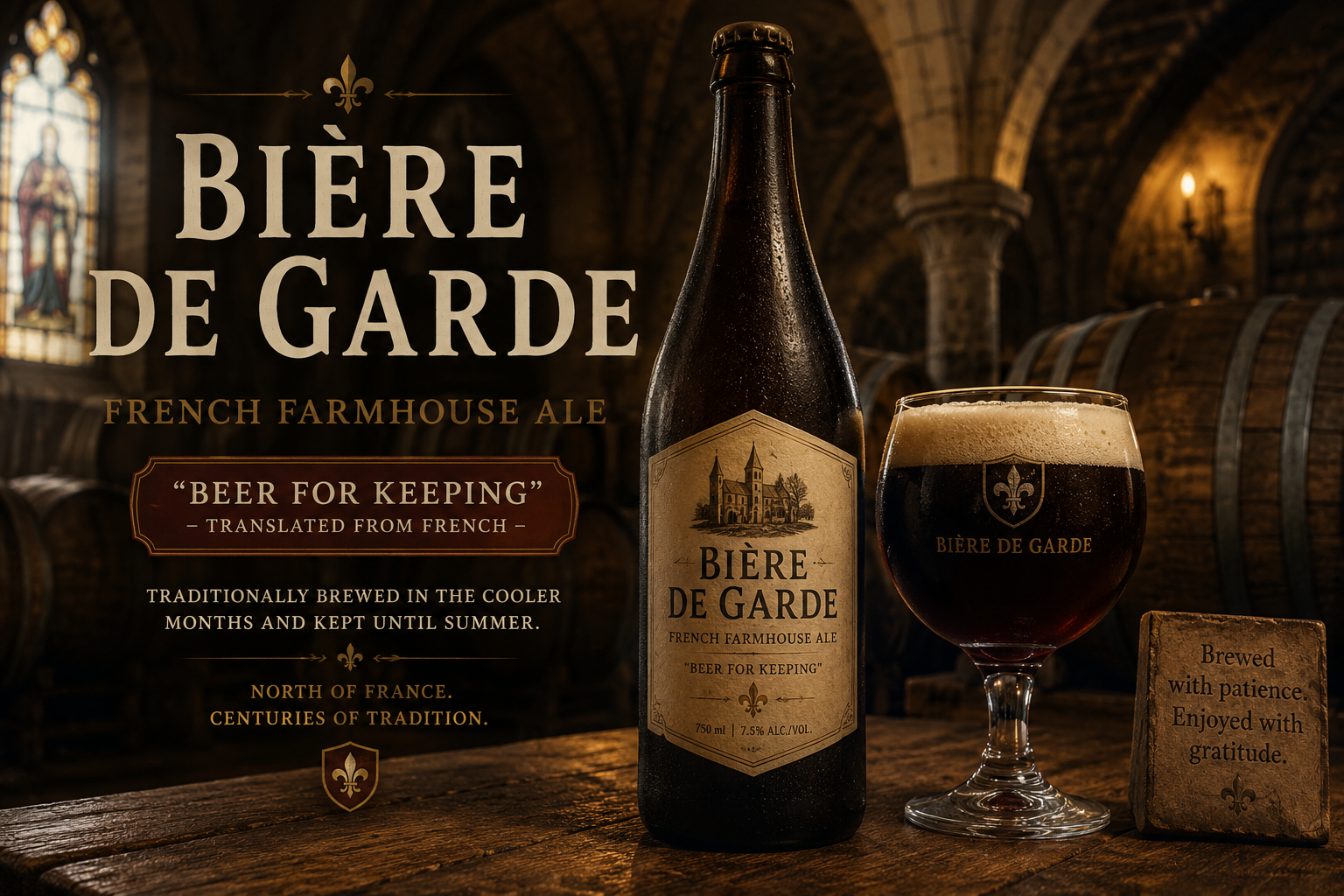
Bière de Garde translates roughly as “beer for keeping”.
Historically associated with northern France, particularly French Flanders, these beers were traditionally brewed during the cooler months and then kept for drinking later.
Before modern refrigeration, brewing during warm weather could be difficult. Cooler temperatures gave brewers greater control over fermentation and reduced the risk of unwanted microorganisms spoiling the beer.
So beer could be brewed when conditions were favourable and then stored — or kept — until it was needed.
Hence: Bière de Garde.
So is it basically a French Saison?
Not quite.
The two styles share some obvious history.
Both are associated with farmhouse brewing traditions. Both developed in neighbouring regions of continental Europe. And both have historical connections with producing beer during cooler months for consumption later.
But put modern examples of the two beside each other and the differences become much easier to see.
Saison is generally associated with a highly attenuated, dry character and expressive fermentation. Pepper, spice and fruity yeast character can all play important roles.
Bière de Garde tends to move the emphasis towards malt.
Expect bread, toast, biscuit, caramel and sometimes richer malt character, depending on the version.
Fermentation character is generally more restrained than you’d expect from a Saison, allowing that malt complexity to take centre stage.
And while Saison often celebrates rustic fermentation character, Bière de Garde is typically conditioned to become smoother and more refined.
One style, several colours
Here’s another interesting feature.
Bière de Garde doesn’t have to be one particular colour.
Traditionally you’ll encounter versions described as blonde, ambrée and brune — blonde, amber and brown.
That means two beers carrying exactly the same style name can look quite different in the glass.
What connects them isn’t simply colour.
It’s their malt-forward character, relatively high strength, restrained fermentation profile and their historical connection with beer designed for keeping.
Why Slow Lane?
If there’s an Australian brewery ideally suited to introducing drinkers to Bière de Garde, Slow Lane makes a lot of sense.
The small Botany brewery has built much of its identity around modern interpretations of old-world European beer styles.
Rather than concentrating solely on whatever beer style happens to be fashionable, Slow Lane regularly explores beers with centuries of history behind them.
Its range has included everything from Doppelbock and Grodziskie to Grisette, Belgian Dubbel, Munich Dunkel, Schwarzbier and Czech lager.
Slow Lane describes its philosophy as taking drinkers on a journey to where a beer style originated.
Long Shadow continues that idea.
At 7.5%, it’s certainly not designed as a throwaway thirst quencher. The beer provides an Australian interpretation of a style built around malt complexity, strength and patience.
Why should we care about an obscure French beer?
Because beer becomes much more interesting when every tap doesn’t lead back to the same handful of styles.
IPA, Pale Ale, Hazy IPA and lager all have their place.
But beer has developed over hundreds — in some cases thousands — of years, and different brewing regions created distinctive beers in response to their climate, ingredients, technology and culture.
Some became global.
Others almost disappeared.
Bière de Garde sits somewhere in between.
It survives, but remains far less familiar to Australian drinkers than its Belgian farmhouse cousin.
So if you come across one, don’t expect a Saison with a French accent.
Take your time with it.
Look for the malt.
Think bread, toast and caramel rather than an explosion of hops. Look for a smoother fermentation character rather than Saison’s peppery exuberance.
And remember what the name tells you.
This was a beer made with patience.
A beer for keeping.
Sometimes discovering something new in beer means looking backwards.